
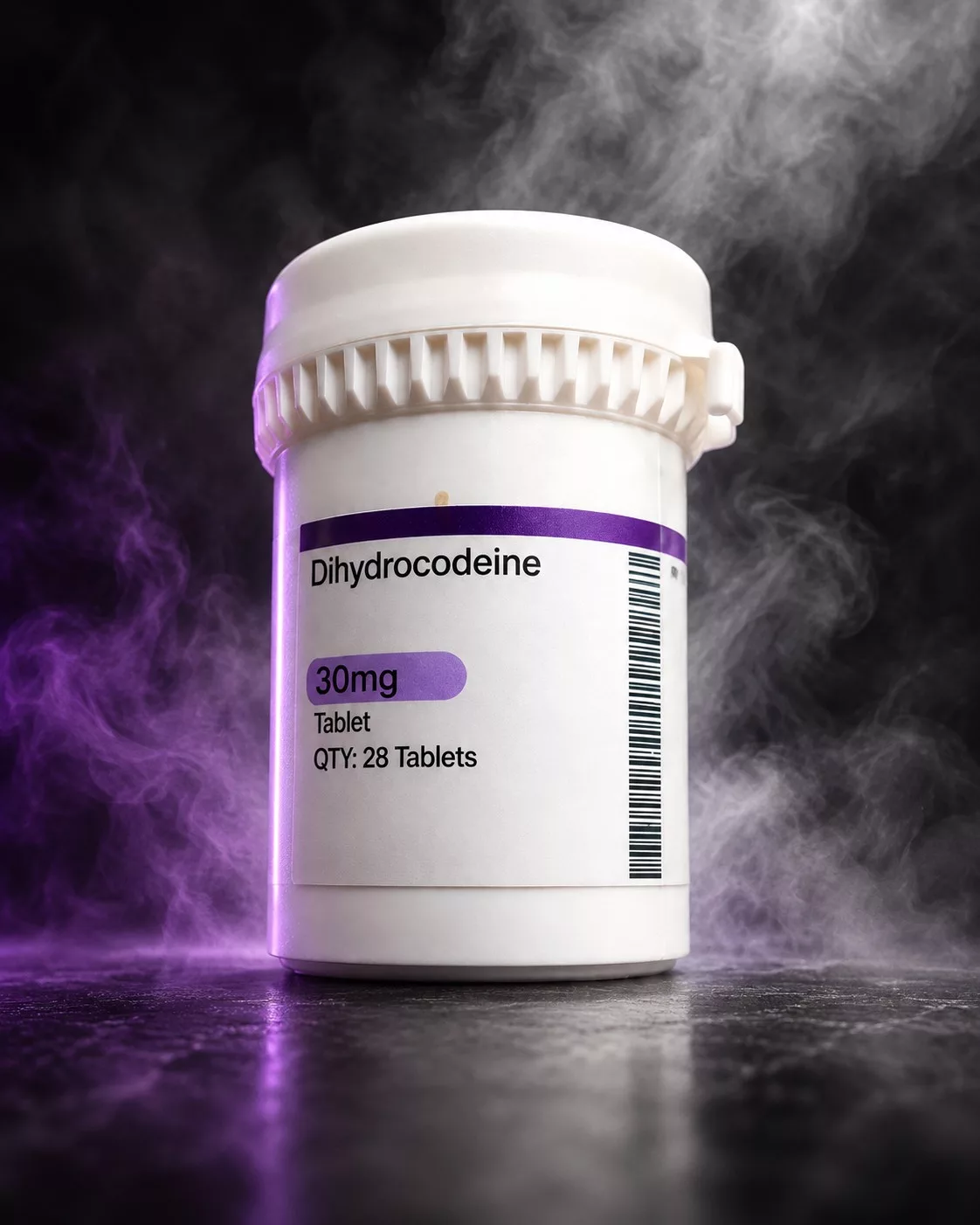
Dihydrocodeine 30mg x 28 Tabs
£59.95
Dihydrocodeine 30mg x 28 Tabs
What is dihydrocodeine?
Dihydrocodeine is a semi-synthetic opioid derived from codeine, a naturally occurring alkaloid found in opium poppies. While its origins lie in the opium poppy plant, dihydrocodeine is typically synthesised through chemical processes, making it a semi-synthetic drug.
Classification-wise, dihydrocodeine is categorised as an opioid analgesic. These substances work by binding to opioid receptors in the central nervous system, thereby altering the perception of pain.
When is dihydrocodeine used?
Dihydrocodeine has a specific place in the broader landscape of pain management. It is used to provide relief for moderate to severe pain. Here’s how it fits into the larger context of pain management:
| Indication | Description |
|---|---|
| Moderate to severe pain | Prescribed when non-opioid pain relievers are inadequate for managing pain. Used for more intense pain. |
| Post-surgery or trauma | Prescribed for acute pain, such as post-surgery recovery or after traumatic injuries for short-term use. |
| Chronic pain management | Considered for chronic pain conditions like cancer-related pain, under close medical supervision and part of a comprehensive pain management plan. |
| Opioid rotation | Used when a patient’s current opioid medication is less effective, may be switched to dihydrocodeine or another opioid to improve pain control. |
| Balancing Benefits and Risks | Prescribers assess pain and weigh benefits against the risks (tolerance, dependence, side effects) before prescribing. |
How does dihydrocodeine work?
Dihydrocodeine works by binding to specific opioid receptors in the brain and spinal cord. These receptors are part of the central nervous system’s pain-regulating network. When dihydrocodeine binds to these receptors, it triggers a number of events that ultimately modulate the perception of pain. It interferes with the pain signals along neural pathways, reducing the sensation of discomfort.
It is important to note that dihydrocodeine comes with the risk of tolerance, dependence, and potential side effects. Therefore, its use should be closely monitored by healthcare professionals, and it should be taken strictly as prescribed.