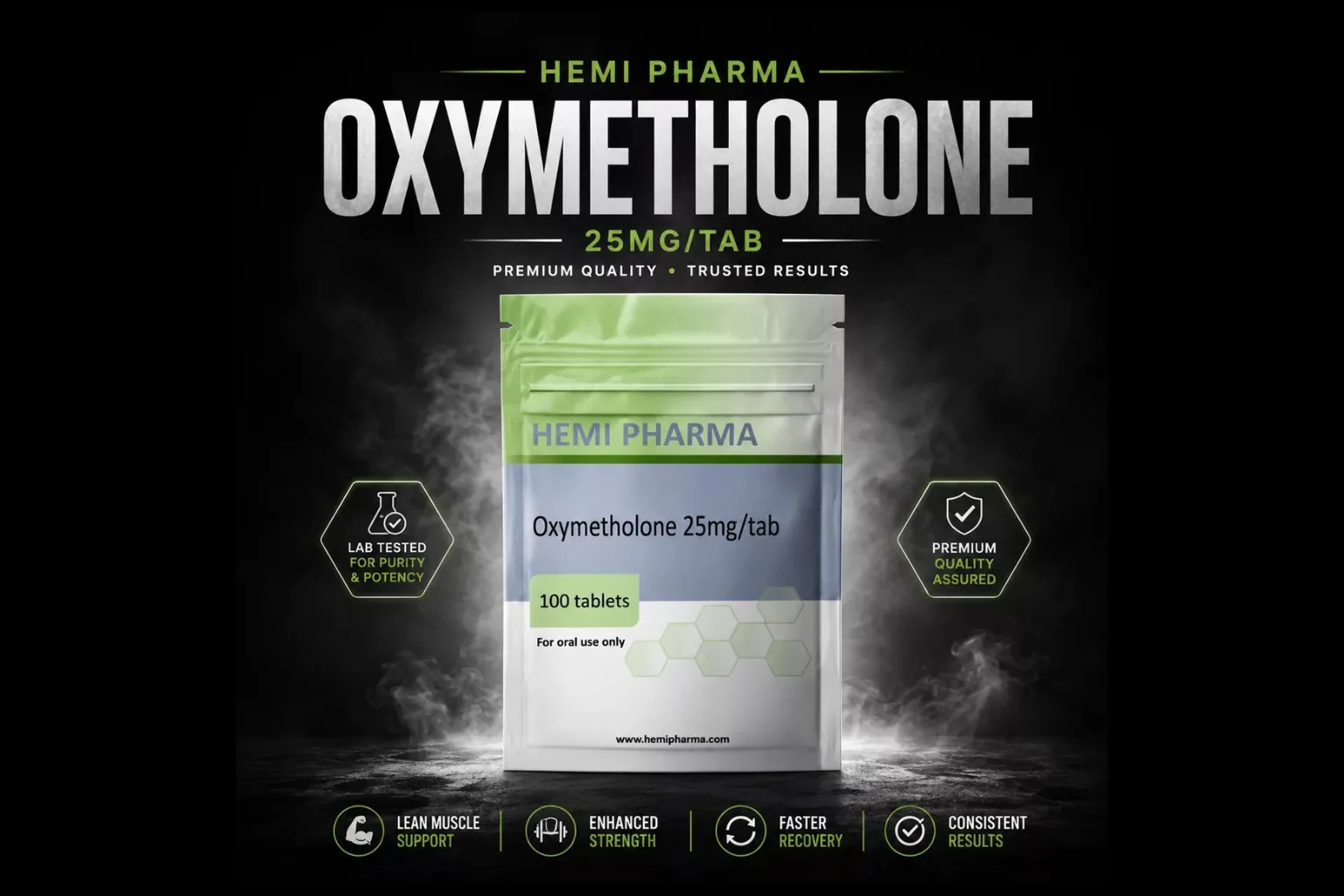
Anadrol is one of the more recognisable names within discussions surrounding oral anabolic steroids, but familiarity with the name does not necessarily mean that the compound itself is well understood. Anadrol is associated with oxymetholone, a synthetic anabolic-androgenic steroid that has a history extending beyond modern performance discussions.
That history is important because oxymetholone is not simply a product category or a bodybuilding label. It is a defined chemical compound with particular structural characteristics, pharmacological properties and health considerations. Understanding those differences provides a much more useful starting point for researching Anadrol than relying on short product descriptions or anecdotal claims.
Oxymetholone belongs to a group of anabolic-androgenic steroids whose molecular structure allows oral administration. Research into this wider class has also identified important differences between orally bioavailable 17α-alkylated compounds and other androgen formulations.
For anyone researching Anadrol, therefore, the more useful questions are not simply what people claim the compound can do, but what oxymetholone is, why its formulation matters, how specific products should be evaluated and what the scientific literature says about its wider health profile.
Oxymetholone is an anabolic-androgenic steroid that has been studied in medical settings as well as in the much broader world of performance enhancement. Its history includes therapeutic applications involving conditions associated with inadequate red blood cell production and other catabolic states.
Its identity as oxymetholone is particularly important because the name Anadrol can sometimes become detached from the underlying compound in online discussions. The commercial name may be more familiar to readers, but oxymetholone is the actual active steroid compound that gives the product its pharmacological identity.
This distinction becomes increasingly useful when researching products online. A category such as Anadrol oral steroids describes a group of products associated with the compound, while an individual product identifies a particular manufacturer and formulation.
That means three different levels should be kept separate: the compound itself, the product category and the individual commercial product.
The distinction sounds simple, but it prevents a lot of confusion when comparing information from medical literature, educational resources, forums and online product pages.


One of the most interesting aspects of oxymetholone is the structural modification associated with its oral availability.
The scientific literature identifies oxymetholone among the C-17α-alkylated anabolic-androgenic steroids. This type of structural modification was developed in part to alter how steroid molecules are metabolised and to make oral administration possible.
This is an important point because “oral steroid” is sometimes treated as though it describes a single pharmacological category. It does not.
Different compounds can have very different structures and biological characteristics despite all being administered orally. Looking only at the fact that a tablet is swallowed tells us very little about the compound itself.
The same principle applies when comparing oral and injectable anabolic steroids. Injectable testosterone products, for example, commonly use esterification to alter pharmacokinetic characteristics, while C-17α alkylation represents a different structural approach associated with oral bioavailability.
This is why formulation deserves attention when researching any steroid product. The route of administration is not merely a convenient detail. It is connected to the chemistry of the compound and the way the body processes it.
Once oxymetholone and its formulation are understood, the next distinction is between the compound and the specific product.
Anadrol is widely used as a name associated with oxymetholone, but products sold under an Anadrol description can still differ according to manufacturer, presentation and product specifications.
For someone researching the market, this means that finding the right compound is only the beginning. The next question becomes which specific product is being considered and what information is available about that product.
This is where the Anadrol oral steroids category on Online Steroids UK becomes relevant. It provides a dedicated place to view products within the specific Anadrol category rather than forcing readers to search through a broad oral steroid catalogue.
The distinction also helps explain why product research should never be reduced to a single question about whether a compound is “strong” or “effective.” Those descriptions are subjective and can mean very different things to different people.
A proper product comparison begins with identity.
Product research is particularly important when dealing with pharmaceutical-style products purchased online.
A useful research process starts by identifying the stated active compound and then looking at the manufacturer, formulation, product presentation and available product information. Packaging and product identity can also matter when establishing whether the product being discussed is actually the same product represented on the website.
This does not mean that a product photograph or website description alone can establish laboratory quality. Those are separate questions.
It is better to distinguish between what a manufacturer or retailer states about a product and what has been independently demonstrated about that product.
That distinction is often missing from online performance discussions.
A product description can tell a reader what the product is claimed to contain. Scientific research can explain what is known about oxymetholone as a compound. Neither automatically proves every claim made about a particular commercial product.
Keeping those levels separate produces a much more accurate understanding.
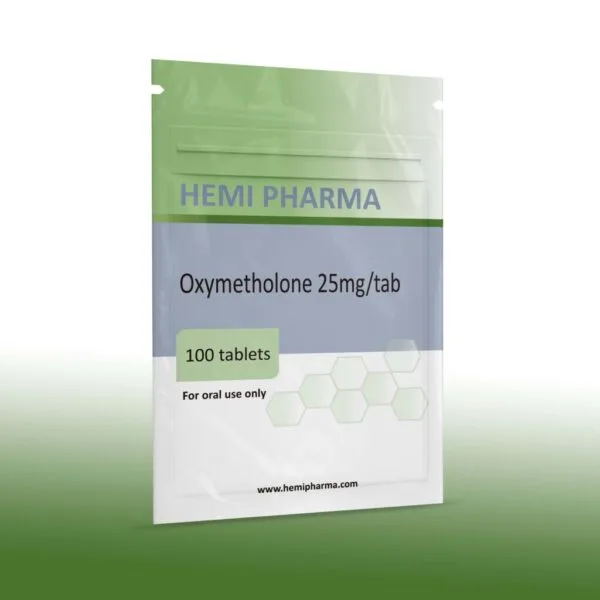
For readers researching a specific oxymetholone product, OSUK currently lists Hemi Pharma Anadrol Oxymetholone 25mg within its Anadrol range.
The product is presented as an oxymetholone product manufactured by Hemi Pharma, with the product page identifying the formulation as Anadrol (Oxymetholone) 25mg.
Readers interested in the specific product can review the Hemi Pharma Anadrol Oxymetholone 25mg product page for the current product information, presentation and purchasing details.
The important point is that this product should be considered at the product level, rather than treating every discussion about oxymetholone as though it automatically describes every commercial product available under the Anadrol name.
That distinction becomes particularly important when researching products from different manufacturers.
Any serious discussion of oxymetholone also needs to address its relationship with liver health.
Oxymetholone belongs to the C-17α-alkylated group of anabolic-androgenic steroids, and this group has a well documented association with hepatic effects. LiverTox identifies several forms of liver injury associated with androgenic and anabolic steroids, including cholestatic injury, peliosis hepatis and hepatic tumours. The association is particularly relevant to the C-17α-alkylated compounds.
This does not mean that every person exposed to an anabolic steroid will experience the same outcome. Individual response, duration of exposure, other substances, existing health conditions and other factors can all influence risk.
It does mean that liver considerations should not be treated as an afterthought when researching oxymetholone.
Recent medical literature continues to document oxymetholone-associated cholestatic liver injury, reinforcing why the compound deserves to be discussed with appropriate attention to its safety profile rather than only its performance reputation.
This is one reason responsible educational material should avoid presenting oxymetholone as a simple shortcut to a particular physique outcome.
Anadrol has been discussed extensively in bodybuilding communities, which means there is no shortage of personal experiences available online.
The problem is that personal experience and scientific evidence answer different questions.
One person’s experience does not establish how another person will respond. It also cannot reliably separate the effects of the compound from training, nutrition, sleep, other substances or changes in body weight occurring at the same time.
Scientific research has its own limitations, but it generally attempts to control variables and distinguish the effects of a particular intervention from background factors.
That distinction becomes particularly important with anabolic steroids because much of the online discussion concerns performance-oriented use rather than the medical contexts in which some compounds have historically been studied.
The result is a large gap between what people report online and what can actually be concluded from clinical or pharmacological evidence.
A good Anadrol resource should acknowledge that gap rather than filling it with confident-sounding claims.

The wider oral steroid category contains compounds with different chemical structures and different histories.
That makes broad statements such as “all oral steroids work the same way” scientifically unhelpful.
Oxymetholone’s molecular structure is one reason it has its own research profile. The C-17α modification associated with oral availability also helps explain why hepatic considerations appear repeatedly in the scientific literature surrounding this group.
This is also why comparisons between oral and injectable products need to be made carefully.
An injectable testosterone ester and an oral C-17α-alkylated anabolic steroid are not simply two different delivery methods for the same thing. Their structures, metabolism and pharmacological context can be different.
For readers interested in the wider formulation question, the OSUK article on testosterone injectable steroids and their formulations provides a useful comparison with the way injectable testosterone products are discussed.
One of the biggest problems with online steroid research is the assumption that a product page automatically establishes authenticity.
It does not.
A retailer can provide product information, manufacturer details and photographs, but authenticity and pharmaceutical quality are ultimately questions that require appropriate evidence.
For this reason, readers researching an online product should pay attention to consistency between the product name, manufacturer, stated compound and packaging.
They should also be cautious about treating dramatic marketing statements as scientific conclusions.
Words such as “powerful,” “premium,” “maximum results” or “guaranteed gains” do not provide evidence of product quality.
A more useful approach is to focus on what can actually be established.
What compound is being identified?
Who is the stated manufacturer?
What formulation is being sold?
What information is available about the product?
Does the product description match the product being presented?
These are much more useful questions than simply asking whether a product has a good reputation on a forum.

Another reason Anadrol discussions can become misleading is the assumption that a compound will produce a predictable outcome in every person.
Human response is considerably more complicated.
Training history, nutrition, recovery, existing health conditions, genetics and other variables all contribute to how an individual experiences a particular substance.
Even in clinical research, outcomes are discussed in terms of populations and measured variables rather than guarantees for a specific individual.
This is particularly relevant when reading performance-oriented claims online. A person reporting a dramatic increase in body weight or training performance cannot automatically establish that the same result will occur for another person.
The responsible way to approach the subject is therefore to separate the known characteristics of oxymetholone from claims about what any particular individual will experience.
The performance reputation of Anadrol can sometimes overshadow the fact that oxymetholone has a substantial pharmacological history.
The medical literature does not describe anabolic-androgenic steroids purely in terms of muscle development. Their effects can involve multiple physiological systems, and the potential for adverse effects is part of the scientific record.
For oxymetholone specifically, hepatic considerations deserve particular attention because of its classification among C-17α-alkylated anabolic steroids.
Research into anabolic-androgenic steroids more broadly has also identified cardiovascular, endocrine and reproductive considerations, although the evidence varies depending on the specific compound, population and pattern of use.
That variability is exactly why broad claims should be avoided.
The goal of good educational content is not to make oxymetholone sound harmless, but neither is it to sensationalise every possible outcome. The useful approach is to explain what is documented, where evidence is stronger, and where individual circumstances matter.
The way people research anabolic steroids has changed considerably.
Search engines now return a mixture of medical literature, retailer pages, bodybuilding forums, social media posts, product reviews and AI-generated material. Those sources do not have equal evidentiary value.
A product page is useful for understanding what a retailer says it is selling.
A scientific publication is useful for understanding research findings.
A medical reference can provide information about pharmacology and adverse effects.
A personal forum post provides an individual’s experience.
Confusing those categories is one of the easiest ways to reach an unreliable conclusion.
For someone researching Anadrol, the strongest approach is therefore to start with the compound itself, understand its formulation and scientific history, and then move toward individual product information.
That provides considerably more context than simply searching for the strongest claims about results.
Once the compound and formulation have been understood, the individual product becomes easier to evaluate.
OSUK’s Hemi Pharma Anadrol Oxymetholone 25mg represents a specific product rather than a definition of oxymetholone as a whole.
That distinction allows the product page to serve its proper purpose: providing information about the specific product currently listed by the retailer.
Readers researching the wider category can also browse the Anadrol oral steroids collection to see the products currently grouped within that category.
This creates a useful separation between educational research and product-level information.
The article explains the compound and its context.
The category shows the wider Anadrol product range.
The individual product page provides information about the specific Hemi Pharma product.
That is a much clearer way to navigate the subject than treating every Anadrol product as interchangeable.
Anadrol remains a well known name in discussions surrounding oral anabolic steroids, but the compound becomes much easier to understand once the marketing language is removed and the underlying pharmacology is considered.
Oxymetholone has a defined chemical identity, a history of medical research and a structural profile that distinguishes it from other anabolic-androgenic steroids.
Its classification among C-17α-alkylated compounds also makes liver health an important part of any serious discussion. The scientific literature provides substantial documentation of hepatic risks associated with this broader class.
At the product level, the same principle applies. A product name does not replace product research, and a retailer description should not be confused with independent scientific evidence.
For anyone researching Anadrol, understanding those distinctions creates a more informed picture of the compound, the oral formulation and the products available within the category.
Anadrol is more than a familiar name within performance discussions. At its core is oxymetholone, a specific anabolic-androgenic steroid with a distinctive oral formulation and a substantial pharmacological history.
Understanding that background makes it easier to separate compound identity from commercial product identity, scientific evidence from anecdotal experience, and product information from broader claims about performance.
For readers researching oxymetholone products, OSUK’s Anadrol category provides access to the current range, while individual product pages provide the specific information associated with each listed product.
The most useful research begins with understanding what the compound actually is. From there, formulation, product identity, authenticity, evidence and health considerations all become part of the same conversation.

We're unable to send emails to Gmail addresses due to delivery restrictions.
If you have a Gmail account, please send us an email first so we can respond directly to your messages.